
Feb 12, 2026
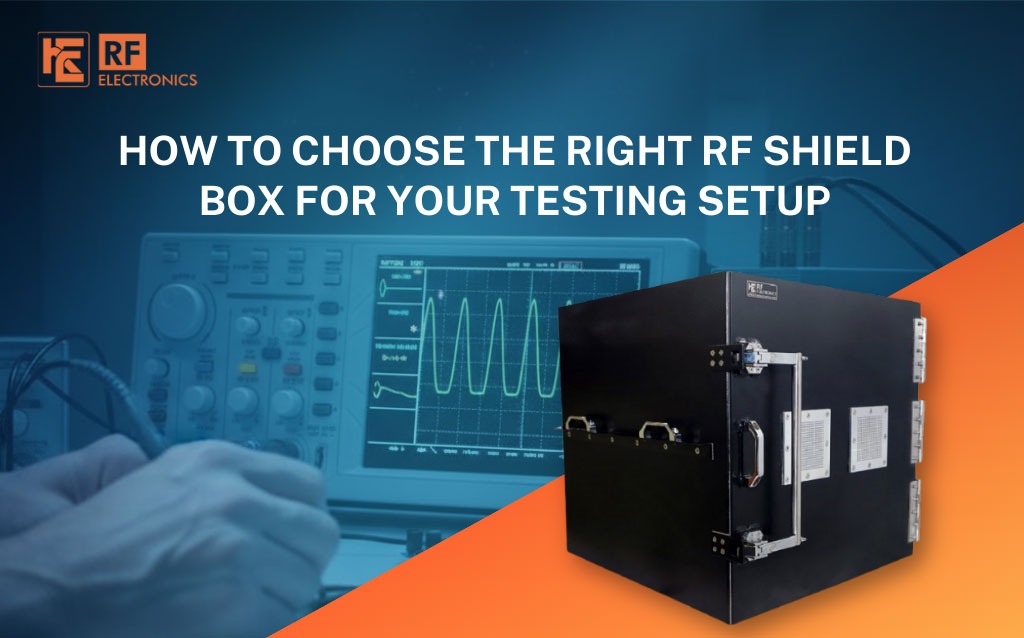
In today’s rapidly evolving wireless ecosystem, accurate and reliable device testing is essential for ensuring performance, compliance, and product quality. Technologies such as Wi-Fi, Bluetooth, 4G/5G, IoT, and RFID rely heavily on precise RF validation to function effectively in real-world environments. However, external signal interference can significantly impact testing accuracy. This is where an RF Shield Box plays a critical role.
Selecting the right RF Shield Test Box is essential for creating a controlled testing environment, improving repeatability, and maintaining compliance with wireless testing standards. This guide explains how to choose the right RF testing shield box based on key technical parameters, application requirements, and testing environments.
An RF Shield Box, also known as an RF testing chamber or wireless testing shield box, is a shielded enclosure designed to block external radio frequency signals and prevent signal leakage during testing. It provides a controlled environment where wireless devices can be tested without interference from external sources.
A shielded enclosure for RF testing is widely used in R&D labs, production lines, and compliance testing facilities to validate device performance, antenna efficiency, signal strength, and communication reliability. Compared to large shielded rooms or anechoic chambers, an RF Shield Test Box offers portability, cost efficiency, and ease of integration into automated testing setups.
Wireless devices operate in crowded RF environments where multiple signals can interfere with test results. RF isolation testing ensures that the device under test (DUT) communicates only with intended signals during evaluation.
A high-quality EMI shielding box helps achieve:
- Accurate and repeatable test results
- Elimination of environmental interference
- Faster and more reliable device validation
- Improved compliance with wireless certification standards
- Enhanced production testing efficiency
1. Frequency Range Compatibility
Modern wireless devices operate across multiple frequency bands, including Wi-Fi-8, Bluetooth, 4G/5G, IoT communication bands, and RFID. Selecting a wideband RF Testing Shield Box ensures flexibility for future testing requirements.
2. RF Isolation Performance
Isolation measures how effectively an RF Shield Test Box blocks external signals and prevents internal signal leakage. High isolation improves signal integrity and measurement repeatability.
3. Chamber Size and DUT Accommodation
The enclosure should accommodate the device under test along with connectors, cables, antennas, and fixtures while allowing easy placement and scalability.
4. I/O Interface and Connectivity Requirements
A shielded enclosure for RF testing should provide RF connectors, power supply connections, USB, LAN, or fiber optic interfaces without compromising shielding performance.
5. Automation and Production Testing Compatibility
Modern RF Shield Test Boxes should support robotic handling, pneumatic or motorized lid operation, and automated testing software integration.
6. Mechanical Design and Durability
High-quality shielding materials, strong structural integrity, long cycle life, and easy maintenance ensure consistent performance.
Wi-Fi and Bluetooth Device Testing requires compact RF shield boxes with strong isolation and flexible connectivity.
5G Module and Antenna Testing requires shield boxes supporting higher frequencies and automated testing integration.
IoT Device Validation requires versatile RF Shield Test Boxes supporting multiple communication protocols.
Defense and Aerospace Testing requires high isolation RF shield test enclosures to meet strict reliability standards.
Research and Development Laboratories require customizable RF testing shield boxes for prototype testing.
- Selecting based only on price
- Ignoring future frequency expansion
- Underestimating RF isolation needs
- Overlooking automation compatibility
- Choosing non-customizable solutions
RF Electronics specializes in designing and manufacturing high-performance RF Shield Test Boxes that meet diverse industry requirements. The company offers custom-engineered RF shielding solutions, high isolation performance, automation-ready designs, and durable construction for industrial testing environments.
Choosing the right RF Shield Box ensures reliable wireless device testing, product quality, and regulatory compliance. Evaluating frequency compatibility, isolation performance, chamber size, connectivity, automation readiness, and mechanical durability helps organizations select the most suitable RF Shield Test Box for their testing setup.
Need Help Selecting the Right RF Shield Box?
Explore RF Electronics’ advanced range of RF Shield Test Boxes or connect with RF experts for customized shielding solutions.
Previous Blog
How RF Shield Boxes Improve Wireless Product Development
Learn MoreNext Blog

AI and Automation in Modern OTA Testing Labs
Learn More

 Free Consultation


